5 Effective Tips to Beat Procastination & Boost productivity


Imagine this: You sit down to work. Then, you start scrolling through social media or watching your favourite show instead. You are not alone. About 20 to 25 percent of adults say they struggle with procrastination. This habit can cause more anxiety, guilt, and stress as deadlines approach. However, you can overcome procrastination with the right strategies. You can regain your productivity.
Step | Description |
|---|---|
1 | Face a hard or unpleasant task |
2 | Feel anxious or uncomfortable about the task |
3 | Procrastinate to feel better for a short time |
4 | Feel guilty and criticise yourself for procrastinating |
5 | Feel more pressure as deadlines come closer |
6 | Feel even more stress about the task |
7 | Procrastinate more because of the extra stress |
Embrace the journey to conquer procrastination.
1.Identify Procrastination Triggers
Recognise Personal Patterns
Procrastination often begins with hidden triggers. You may feel stuck but not know why. Common triggers are fear of failure, wanting everything to be perfect, and not feeling motivated. These feelings can cause anxiety and stress, making it hard to start tasks. Other triggers come from your surroundings, like distractions from social media or a messy workspace. When your priorities are unclear, you might feel unable to decide, leaving you stuck.
Tip: Pay attention to when and why you put off tasks. Notice your feelings and what’s around you. Are you avoiding a task because it seems too hard? Or is your phone distracting you?
Understanding your personal patterns helps you break the cycle. Research shows that procrastination happens when you choose short-term comfort over long-term rewards. This choice can lead to regret and more stress as deadlines get closer. When you see the moments and feelings that make you procrastinate, you gain control. You can then plan how to act differently.
Reframe Triggers
Once you find your triggers, you can change how you react to them. For example, if wanting everything to be perfect stops you from starting, try setting a "good enough" goal instead of aiming for perfect. This change lowers pressure and helps you move forward.
Here is a simple way to change your thoughts:
Thought Identification: Write down negative thoughts like "I’m not good enough" or "This is too hard."
Thought Challenging: Ask yourself if these thoughts are true. Look for proof that shows otherwise.
Thought Replacement: Swap negative thoughts with positive ones, like "I can improve with practice" or "Starting is better than waiting."
Mindfulness can also help you notice when procrastination starts. By staying aware, you can stop negative feelings before they grow. Techniques from cognitive behavioural therapy, like thought-stopping, teach you to interrupt unhelpful patterns and focus on the task.
Remember: You don’t have to wait for the perfect moment or conditions. Taking small steps now builds momentum and confidence. This method is one of the best ways to stop procrastination.
By recognising and changing your procrastination triggers, you take control. You stop procrastinating and start building positive habits that boost your productivity and well-being.
2.Set Achievable Goals
Setting achievable goals is very important for beating procrastination and improving productivity. When you break tasks into smaller parts, they seem less scary. This method, called chunking, helps you focus on one step at a time. It makes you feel less overwhelmed. Here’s how chunking can help you:
Reduces Overwhelm: By splitting a big task into smaller pieces, you can work on each part without feeling stressed.
Enhances Motivation: Finishing each small task gives you a sense of success, which boosts your motivation to keep going.
Improves Time Management: This method helps you stay organised, leading to better task completion.
The human brain understands information better when it is in smaller parts. Each completed small task not only builds your confidence but also helps you see your progress. By looking at a big project as a series of small steps, you can reduce procrastination and stay focused on each part of the task.
Use the Chunking Method
To use the chunking method, first find a big task you’ve been putting off. Break it down into smaller, clear steps. For example, if you need to write a report, think about these chunks:
Research the topic
Create an outline
Write the introduction
Draft each section
Edit and proofread
By working on one chunk at a time, you can lighten your mental load and make steady progress. This technique turns big projects into achievable goals, helping you keep your momentum and motivation.
Apply SMART Criteria
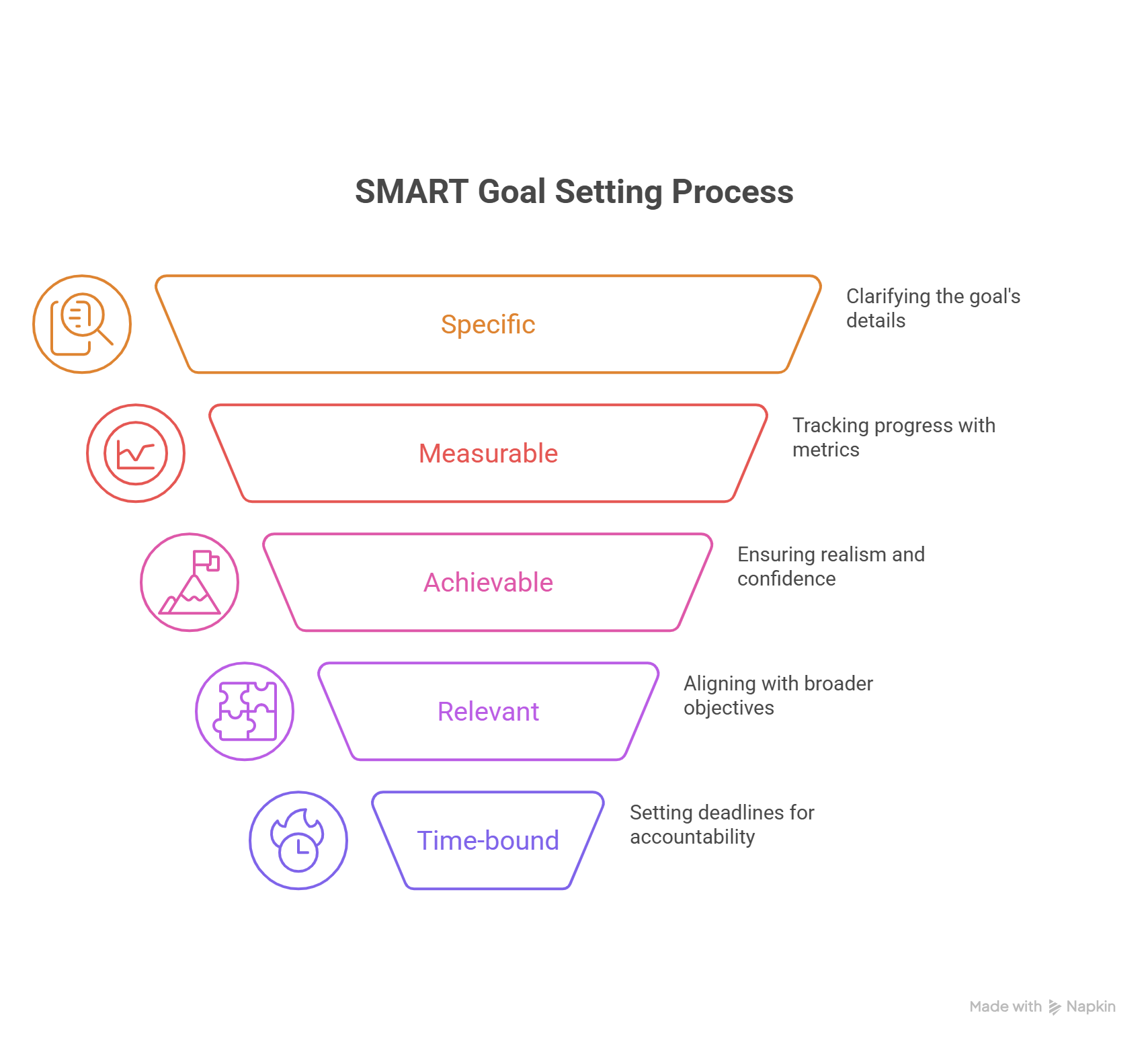
SMART goals framework
Another good way to set achievable goals is by using the SMART criteria. This method makes things clearer and keeps you accountable. Here’s what SMART stands for:
Component | Contribution to Goal Setting |
|---|---|
Specific | Clarifies what needs to be done, who is responsible, and why it matters. |
Measurable | Helps you track progress with specific measures, so you can see if you are completing your goals. |
Achievable | Makes sure your goals are realistic and possible, which helps avoid frustration and builds confidence. |
Relevant | Connects your goals to bigger objectives, showing how your actions help overall success. |
Time-bound | Sets deadlines that encourage accountability and motivation, helping you finish tasks on time. |
By making sure your goals are specific, measurable, achievable, relevant, and time-bound, you can track your progress well. This method helps you stay focused and aligns your efforts with your bigger goals.
Setting short-term goals is also very important. Research shows that breaking tasks into smaller steps makes them feel easier. For example, working on an essay for just 30 minutes can lower pressure and help you start tasks. Creating a routine helps keep things organised and moving, which can greatly reduce procrastination.
Using these practical tips in your daily life can change how you approach tasks. Remember, every small step you take gets you closer to your bigger goals.
3.Create a Structured Schedule

Making a structured schedule is very important for beating procrastination and boosting productivity. When you plan ahead, you set yourself up for success. A good schedule helps you manage your time well and decide what tasks are most important. Here are some easy tips to help you get started.
Allocate Time Blocks
Setting specific time blocks for tasks can really help you focus. By giving fixed times to each task, you cut out distractions and improve your productivity. This method, called timeboxing, helps you focus on one task at a time. Here are some good things about this approach:
Increased Focus: Focusing on one task means fewer distractions.
Reduced Procrastination: A clear schedule makes you want to start tasks sooner.
Better Time Awareness: Knowing how long tasks take helps you avoid taking on too much.
By using time blocks, you can create a space without distractions that helps you be productive.
Reduce Decision Fatigue
Decision fatigue can make it hard to start and finish tasks. Every choice you make uses up your mental energy. To fight this, make routines that take care of decisions for you. This way, you save your brainpower for harder tasks. Here are some ways to cut down on decision fatigue:
Minimise Non-Essential Decisions: Focus on what really matters to save your mental energy.
Create a Daily Routine: Automating your daily tasks gives you more brainpower for important choices.
By reducing decision fatigue, you make it easier to tackle tasks efficiently.
Using these time management tips in your daily life can change how productive you are. Remember, a structured schedule helps you manage your time and improves your overall well-being.
4.Minimise Distractions
Limit Digital Interruptions
Digital distractions can really hurt your productivity. You may check emails or scroll through social media instead of working. Studies show it takes more than 23 minutes to fully focus again after being interrupted. This is called ‘task switching’, and it has a real cost to your brain.
Tip: Think about these facts:
Almost two-thirds of workers find it hard to focus because of meetings and emails.
An office worker gets over 100 emails each day, making distractions a big problem for productivity.
To fight this, set specific times to check emails. Also, limit social media use while you work. Use technology wisely; apps made for focus can help you stay on track.
Establish a Focused Workspace
Making a good work environment is key to reducing procrastination. A tidy workspace helps your brain get ready to concentrate quickly. Here are some tips to improve your workspace:
Clear Focus Triggers: Use things in your workspace that remind you it’s time to work.
Batch Similar Tasks: Doing similar tasks together helps keep your focus strong.
Define Outcomes: Set clear goals for each work session to know what you want to finish.
Manage Energy Levels: Plan tough tasks for when you feel most productive.
By using these tips, you can create a workspace that helps you focus and reduces procrastination. Remember, a well-organised space can really boost your ability to concentrate and reach your goals.
If you want more help with your studies, think about contacting Suited Tutor. Based in Oxford, we provide tailored tutoring services that can keep you motivated and productive. Visit suitedtutor.com to find out how we can help you.
5.Practise Self-Compassion
Acknowledge Progress
Practising self-compassion can really help you stop procrastinating. When you notice your progress, even if it’s small, you feel more motivated. Celebrating little wins is important to keep your energy up. Each success shows you that you are going the right way. Here are some good things about recognising your progress:
Early successes boost your self-belief, which is key for motivation.
Confidence from small wins helps you keep trying to reach your goals.
Acknowledging progress keeps you excited to work towards bigger aims.
Tip: Keep a journal to write down your achievements. Writing what you do each day helps you see how much you have achieved.
Develop a Positive Mindset
Having a positive mindset is very important to beat procrastination. Self-compassion helps you be kinder to yourself and makes you stronger emotionally. It helps you step back from negative thoughts that cause procrastination. Instead of waiting for the perfect time to start, focus on making progress instead of being perfect. This change in thinking can help you be more productive.
Research shows that wanting everything to be perfect often comes from fear, which stops you from finishing tasks. By focusing on finishing rather than being perfect, you can break the procrastination cycle. Here are some ways to build a positive mindset:
Set realistic goals for success instead of aiming for an ideal.
Use a checklist to check quality without getting stuck in details.
Give yourself a set time for tasks to create urgency and stop overthinking.
By practising self-compassion and building a positive mindset, you can stop procrastinating and create daily habits that improve your productivity.
Using the tips we talked about is very important for beating procrastination and improving your productivity. First, notice what makes you procrastinate and set goals that you can actually reach. Remember, taking the first step is really important. Being consistent is essential; small actions done regularly can lead to big progress over time. Be kind to yourself and make a helpful environment. If you want more help, think about contacting Suited Tutor in Oxford for personalised support on your path to success.
See Also
7 Strategies For Students To Overcome Procrastination
Smart Study Techniques: Tips For Enhanced Learning Efficiency
Child-Friendly Stress Relief Strategies For Academic Success
10 Key Strategies For Regulating Children's Screen Usage
Understanding The Pomodoro Technique: Insights From Neuroscience