10 Essential Tips for Managing Kids' Screen Time


Managing screen time plays a crucial role in your children's health and development. A common question among parents is, "how much screen time is healthy?" Excessive screen time can lead to various issues, including delays in communication and cognitive skills. Research indicates that kids who spend too much time on screens may face negative effects on their mental wellbeing and overall child development. Striving for a healthy balance between screen use and other activities is essential for fostering a well-rounded upbringing.
1.How Much Screen Time is Healthy?
Determining how much screen time is healthy for kids involves understanding age-specific guidelines and expert recommendations. These guidelines help you set appropriate limits based on your child's age and developmental stage.
Age-Specific Guidelines
For children aged 2-5, the recommended maximum is 1 hour of screen time per day. This limit helps prevent negative outcomes such as reduced playtime, poorer social skills, and an increased risk of obesity. The critical threshold for screen time for this age group is essential for fostering healthy development.
Children aged 2-5 should have:
A maximum of 1 hour of screen time per day.
Limited exposure to screens to encourage more physical activity and social interaction.
Focus on educational content that promotes learning and development.
For children aged 6 and older, the guidelines shift slightly. The NHS recommends that you set consistent limits on screen time to ensure it does not interfere with sleep, physical activity, and other essential health behaviours.
For children aged 6 and older:
Limit screen time to no more than 2 hours each day.
Ensure that screen time does not disrupt sleep (9-12 hours for ages 6-12) or homework.
Encourage at least an hour of physical activity daily.
Expert Recommendations
The 3-6-9-12 rule provides a structured approach to managing screen time for kids at different developmental stages. This rule outlines specific guidelines based on age groups:
Age Group | Screen Time Guidelines |
|---|---|
Before age 3 | No screens at all; focus on real-world interaction and sensory play. |
Before age 6 | No personal consoles or unsupervised screen use; limited educational TV with adult supervision. |
Before age 9 | No internet access alone; computers for learning with parental guidance. |
Before age 12 | No social media accounts or unsupervised online communication; strong supervision needed for digital use. |
By adhering to these guidelines, you can help your children develop a healthy relationship with technology while ensuring they engage in other vital activities.
2.Screen Time Schedule
Establishing a screen time schedule is vital for managing your kids' screen time effectively. A consistent routine helps children understand when they can use screens and when they need to engage in other activities. The American Academy of Pediatrics suggests limiting screen time to one to two hours per day for children and teens. This structure encourages positive behaviours, such as completing homework and chores, by allowing kids to earn screen time.
Tip: Consistency in your schedule builds trust and responsibility. When children know what to expect, they can focus better on tasks without distractions.
Establishing Routine
To create a successful screen time routine, consider these steps:
Set specific times for screen use each day.
Include breaks between screen sessions to encourage physical activity.
Discuss the schedule with your kids to ensure they understand and agree with it.
Flexibility in Scheduling
While routines are essential, flexibility is equally important. Allowing exceptions during special events can enhance family connections. Understanding your child's needs for flexibility fosters a supportive relationship.
Balanced screen habits contribute to better mood regulation and attention spans.
Kids who learn to balance activities often experience higher self-esteem and stronger family connections.
Creating space for play and connection is crucial for your children's overall well-being. A healthy approach to screen time supports their emotional, social, and cognitive development.
3.Reducing Screen Time
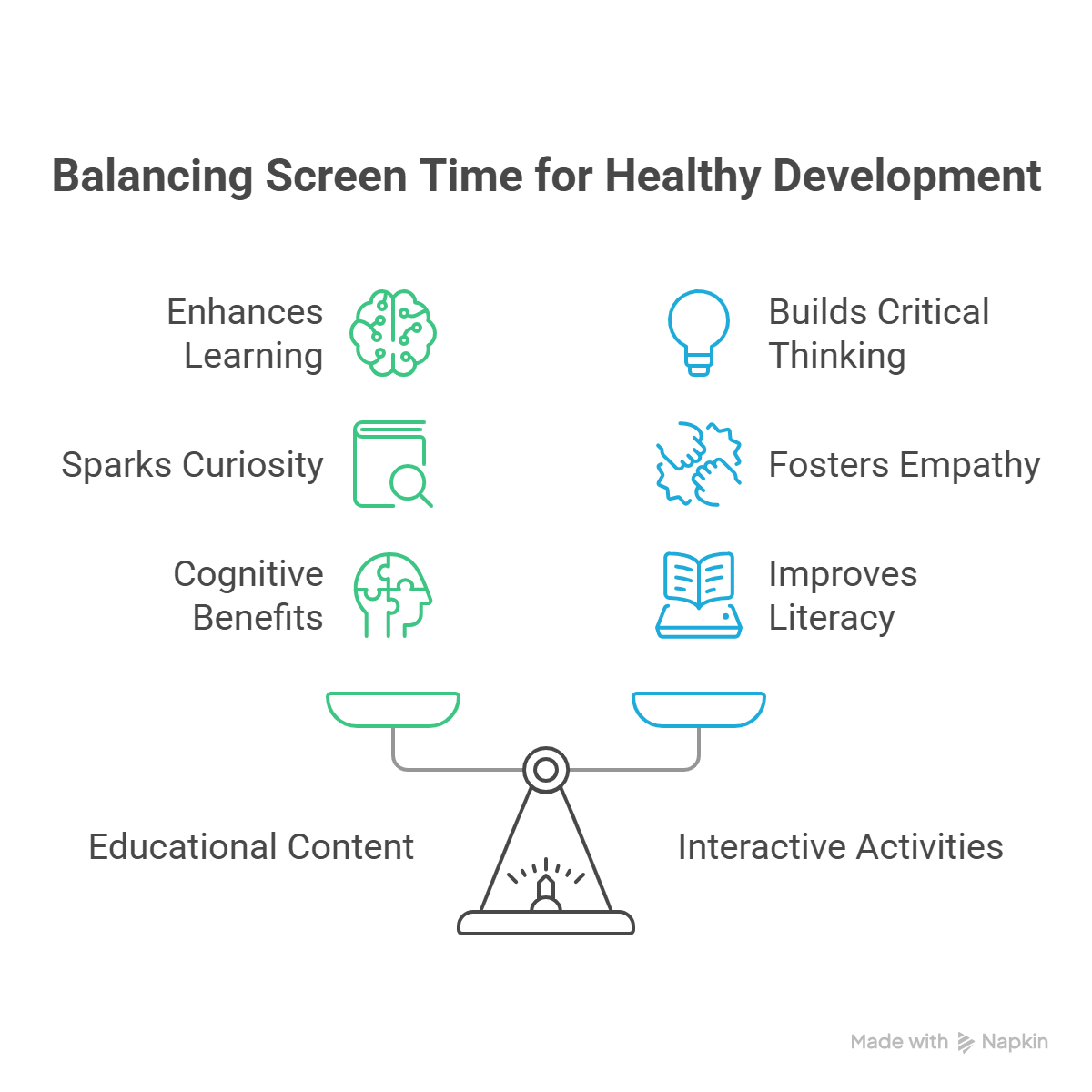
Balance screen time to support healthy development
Reducing screen time can significantly benefit your children's health and development. You can encourage active and educational screen time by selecting content that promotes learning and interaction. Age-appropriate content positively affects cognitive development, especially when designed to encourage interaction. Focus on the following types of content:
Educational games that challenge problem-solving skills.
Interactive apps that promote creativity and critical thinking.
Documentaries and educational TV programmes that spark curiosity.
Educational Content
When you choose educational content, consider its potential to engage your kids meaningfully. Video games and educational TV shows can offer cognitive benefits. They can enhance learning when integrated into your children's daily routines. Aim for content that is not purely for entertainment but serves an educational purpose.
Interactive Activities
Interactive screen activities offer more benefits than passive viewing. They build critical thinking through challenges, foster empathy by exploring different perspectives, and improve financial and digital literacy through story-based experiences.
By choosing meaningful content and balancing it with outdoor and creative activities, you can support your children’s healthy development—both on and off screens.
If you're looking for additional support in your children's education, consider exploring resources from Suited Tutor, based in Oxford. They offer tailored tutoring services to help students excel academically while maintaining a healthy balance with screen time.
4.Setting Boundaries
Establishing clear boundaries for screen time is essential for your children's health and development. When you set limits, you help them understand what to expect regarding their screen usage. Open discussions about these boundaries foster understanding rather than imposing strict rules. You can encourage self-moderation by being a digital role model and adhering to the same rules yourself.
Screen-Free Zones
Creating screen-free zones in your home can significantly enhance family interactions and promote healthier habits. Consider establishing specific areas where screens are prohibited, such as:
The dining table
Bedrooms
Family rooms during designated times
These zones encourage engagement in other activities, such as conversation, reading, or relaxation. By limiting screen access in these areas, you create opportunities for your kids to connect with family members and develop essential social skills.
Time Limits
Setting clear screen time limits is essential, as children often struggle to manage their own use. Too much screen time can affect mental health, leading to meltdowns and disrupted sleep.
You might set daily limits (for example, two hours of recreational use), create activity-specific rules (such as limiting gaming while allowing more educational content), and introduce screen-free times, particularly during meals and before bed.
Consistently enforcing these boundaries helps children develop healthier habits and better self-regulation. The aim is a balanced approach that supports their overall wellbeing.
5.Be a Role Model
Demonstrating Healthy Habits
Your behaviour significantly influences your children's screen time habits. When you model healthy screen use, you set a powerful example. Research shows that children are much more likely to spend high amounts of time screen-viewing if their parents also spend a lot of time on screens. This highlights the importance of your actions in shaping their lifestyle behaviours.
To demonstrate healthy habits, consider these strategies:
Use tech together: Sharing experiences can turn individual screen time into family time.
Show what balance looks like: Ensure your child sees you enjoying other parts of life without screens.
Keep reviewing your habits: Take stock of how your screen use makes you feel.
By being mindful of your screen habits, you encourage your kids to develop a balanced relationship with technology.
Engaging in Non-Screen Activities
Engaging in non-screen activities as a family can enhance your children's development. Excessive screen time can hinder communication skills due to a lack of focus. By participating in activities away from screens, you help your kids develop better connectivity and communication abilities.
Consider these benefits of engaging in non-screen activities:
Benefit | Description |
|---|---|
Enhanced Social Skills | Group activities foster empathy, cooperation, and communication skills. |
Physical Wellness | Outdoor play promotes better fitness and motor skill development. |
Stronger Family Bonds | Shared activities strengthen parent-child connections and create memories. |
By prioritising non-screen activities, you create opportunities for meaningful interactions and strengthen family bonds.
If you seek additional support in your children's education, consider exploring resources from Suited Tutor, based in Oxford. They offer tailored tutoring services to help students excel academically while maintaining a healthy balance with screen time.
6.Promote Outdoor Play

Balancing Screen Time with Physical Activity
Balancing screen time with physical activity is essential for children’s overall health. Outdoor play not only reduces time spent on screens but also improves physical fitness and wellbeing. Research from the University of Michigan shows that children with access to outdoor play areas are more likely to be active and spend less time on screens, highlighting the clear link between outdoor opportunities and healthier habits.
Simple family activities such as nature walks, bike rides, playing sports in the park, gardening, or even arts and crafts provide enjoyable alternatives to screen time. These activities encourage teamwork, strengthen family bonds and help children achieve the recommended 60 minutes of daily physical activity, while also supporting their emotional and social development.
7.Use Technology Together
Co-Viewing and Discussion
Using technology together with your kids can enhance their learning experience. Co-viewing digital content allows you to engage actively with them. This interaction promotes critical thinking and helps them understand complex concepts. Here are some benefits of co-viewing:
Benefit | Description |
|---|---|
Active Engagement | Engage with your children during media use, asking questions to promote critical thinking. |
Scaffolding Learning | Help your children understand new concepts and relate them to real-life experiences. |
Choosing High-Quality Content | Select educational media that teaches specific skills for effective learning. |
Encouraging Discussion | Discuss content after viewing to reinforce learning and clarify misunderstandings. |
Adapting Approach as Children Grow | Evolve discussions to challenge their critical thinking about media as they mature. |
Balancing Screen Time | Balance digital media with other developmental activities like reading and outdoor play. |
Exploring New Apps Together
Exploring new apps with your children can strengthen their digital literacy, as they learn best through active engagement rather than passive viewing. Navigating apps together, setting clear learning goals and choosing educational games can make screen time both purposeful and enjoyable.
Sharing these experiences not only builds confidence and cognitive skills, but also strengthens communication and deepens your connection as a family.
8.Monitor Content
Monitoring the content your kids access is crucial for their safety and development. Ensuring age-appropriate choices helps you protect their health and fosters a positive relationship with technology.
Age-Appropriate Choices
When selecting digital content, consider the following criteria to ensure it aligns with your child's developmental stage:
Criteria | Description |
|---|---|
Curriculum alignment | Ensures the content meets educational standards and supports learning objectives. |
Age-appropriate content | Content should be suitable for the child's developmental stage and understanding. |
Clear learning objectives | The content should have defined goals that guide the learning process. |
Immediate feedback mechanisms | Features that provide instant responses to the child's actions enhance learning engagement. |
Progressive difficulty levels | Content should adapt to the child's skill level, ensuring a personalised learning experience. |
User-friendliness | The design should be intuitive for children, promoting ease of use and sustained interest. |
Engaging storylines | For reading materials, the narrative should captivate the child's attention and imagination. |
Quality of illustrations | Visual elements should be appealing and support the content, especially in picture books. |
Diverse representation | Content should reflect a variety of cultures and perspectives to promote inclusivity. |
Interactive reading features | Tools like text highlighting can enhance the reading experience and support independent learning. |
9.Encourage Creativity
Screen Time for Creative Projects
Using screen time for creative projects can transform how your kids engage with technology. Engaging with technology purposefully can turn screen time into a productive experience. Here are some ways to make screen time more creative:
Arts and Crafts: Activities like painting, drawing, and sculpting stimulate imagination and problem-solving skills.
Reading Time: Establishing a cozy reading nook encourages storytelling and knowledge, fostering creativity.
Music and Dance: Exploring music through instruments and dance promotes self-expression and fun.
Sports, Hobbies, and Educational Activities: Engaging in hands-on learning and structured hobbies helps develop skills and social relationships.
Creative projects encourage children to express themselves and explore their creativity. Kids enjoy hands-on projects that provide a creative outlet, offering a sense of achievement and freedom to experiment.
10.Communicate Openly
Discussing Screen Time Expectations
Open communication about screen time expectations is vital for fostering a healthy relationship with technology. You should involve your kids in discussions about screen time limits. This approach helps them understand the reasons behind the rules. Here are some best practices to consider:
Best Practice | Description |
|---|---|
Involve children in decision-making | Discuss technology use as a family to ensure everyone agrees on expectations. |
Set clear limits | Establish rules together so children learn self-regulation and are more accepting of limits. |
When you explain screen time limits before they start, it sets a clear understanding. Use a visual timer to indicate when screen time will end. Engage with your child during the transition from screen time to other activities. Validate their feelings when screen time ends. Stay calm and confident in the limits you set. Ask questions about the content they were watching to help them transition smoothly.
Listening to Children's Perspectives
Listening to your children's perspectives on media experiences is equally important. This practice builds digital literacy, which encompasses the skills necessary to critically access, analyse, evaluate, and create media. In today's digital age, these skills are crucial for evaluating the reliability of online content. Ongoing communication about media experiences enhances their ability to navigate online environments effectively.
Encourage your kids to share their thoughts on what they watch. This dialogue fosters critical thinking and helps them articulate their views. A report on young people's literacy highlights the need for ongoing communication to enhance their skills in navigating online environments. Engaging in these discussions not only strengthens your relationship but also empowers your children to become responsible digital citizens.
Managing screen time effectively is vital for your child's health and development. You should establish routines, set boundaries, and encourage outdoor play. By implementing these strategies, you foster a balanced approach to screen time. Remember, Suited Tutor in Oxford offers tailored support to help your child thrive academically while maintaining healthy screen habits.
See Also
Five Effective Strategies for Supporting Resistant Children
Simple Ways to Foster Mindfulness in Children at Home
Top Strategies for Helping Children Manage Academic Stress
Overcoming Digital Distractions: UK Students' Guide to Exam Success