Why the Pomodoro Technique Works: Brain Science Explained


You struggle to maintain focus and boost your productivity in our busy world. The Pomodoro Technique offers a renowned solution for enhanced concentration. What is the scientific secret behind this Pomodoro Technique's effectiveness? This post explores the neurological and cognitive reasons for the Pomodoro's success. This Pomodoro method boosts productivity. Our Oxford-based tutoring brand, suited tutor, champions this Pomodoro technique. We help students achieve academic goals, improving their enhanced productivity and focus with the Pomodoro.
Mastering the Pomodoro Technique: The Fundamentals
What is the Pomodoro Technique?
The Pomodoro Technique is a simple yet powerful time management method. It helps you focus on tasks and avoid distractions. This pomodoro method breaks your workday into focused intervals. You complete these focused intervals with short breaks in between. This structure helps you maintain high concentration.
Origins and Simple Steps
The Pomodoro Technique was developed in the late 1980s by Francesco Cirillo. He was a university student at the time. Cirillo needed to improve his study focus. He experimented with various time intervals. He used a tomato-shaped kitchen timer. This is why the pomodoro method gets its name; 'pomodoro' means tomato in Italian. He found that 25 minutes of work followed by a short break significantly boosted his concentration.
The Core Cycle of a Pomodoro
The Pomodoro Technique involves breaking work into 25-minute intervals. These are known as Pomodoros. You set a timer for 25 minutes. You work on your chosen task until the timer rings. Then, you take a 5-minute break. This short break allows your brain to rest. After you complete four pomodoro sessions, you take a longer break. This longer break lasts 15-30 minutes. This Pomodoro method helps prevent burnout. You reset your pomodoro timer and begin again. This time management method is simple and accessible for everyone.
The Brain Science Behind Pomodoro's Productivity:

Optimising Attention and Cognitive Load
Your brain performs best in short, intense bursts. The pomodoro technique capitalises on this natural rhythm. Cognitive science research shows that attention fluctuates in cycles. You cannot maintain sustained concentration indefinitely. The 25-minute pomodoro interval aligns with how your brain naturally focuses. This approach helps reduce mental fatigue. It also enhances overall productivity. Studies on vigilance show performance can drop quickly, even within five minutes, under complex conditions. This highlights the need for well-designed work intervals.
When you try to work for long periods without a break, you increase your cognitive load. This means you put too much strain on your brain. Frequent task switching, for example, leads to interruptions. This increases cognitive load. It results in mental exhaustion. Your productivity decreases. You might also produce sloppy work. This impairs your ability to learn and retain information effectively. It creates gaps in your knowledge. It also affects your problem-solving skills.
Impact of Increased Cognitive Load | Effect |
|---|---|
Task Accuracy Reduction | Up to 40% |
Completion Time | Significantly increased |
Efficiency during Fragmented Work | 50% drop |
Cognitive Health | Erodes over time |
Memory, Emotional Regulation, Decision-making | Impaired |
Gray Matter in Prefrontal Cortex | Reduced (linked to prolonged multitasking) |
Stress Responses | Heightened (linked to prolonged multitasking) |
The pomodoro technique helps you manage this load. You dedicate each pomodoro to a single task. This creates focused work sessions. You avoid the mental drain of constant switching. This structured approach helps you maintain your focus. It ensures your brain works efficiently during these focused intervals.
Strategic Breaks for Brain Reset and Memory
The pomodoro technique includes regular breaks. These are not just downtime. They are crucial for your brain's health and performance. Your brain needs these moments to reset. A short break allows your prefrontal cortex, responsible for decision-making and concentration, to recover. This reset improves your focus. It also enhances emotional regulation and creativity.
Micro-breaks mend your intellectual capabilities. They help re-attentional networks. They assist in monitoring mental congestion. They also enhance memory consolidation. Cognitive scientists call this the attention-restoration effect. Disengaging from a task restores your brain's ability to maintain attention.
Evidence suggests that 'waking rest' during breaks helps consolidate memories and improve learning. During these rest periods, your brain appears to review and ingrain previously learned information, similar to how sleep aids memory consolidation.
These strategic breaks prevent mental fatigue. They stop cognitive overload. Engaging in light physical activity or mindfulness during your break can restore mental energy. It also restores attention levels. This makes your subsequent pomodoro even more effective.
Time Pressure and Enhanced Focus
The 25-minute timer of each pomodoro creates a gentle sense of urgency. This mild time pressure can actually sharpen your focus. You know you have a clear finish line. This reduces procrastination. You are more likely to start a task when you know it will only last for 25 minutes. This defined end point helps you commit. It helps you dive into your work with laser-sharp focus.
This structure helps you overcome the daunting feeling of a large task. You break it down into manageable pomodoro chunks. Each pomodoro becomes a mini-challenge. You aim to complete as much as possible within that time. This encourages increased focus. It helps you achieve more in less time. You develop a laser-sharp focus on the task at hand.
Neurotransmitters and Reward in Pomodoro Cycles
The pomodoro technique taps into your brain's reward system. Dopamine is a neurotransmitter. It plays a crucial role in motivation. It is often called the 'feel-good hormone'. When you complete a pomodoro, your brain releases dopamine. This creates a sense of pleasure. This positive feeling reinforces the action. It makes you want to repeat it.
Christopher Bergland, in The Athlete's Way, states: "Setting goals and achieving them guarantees a constant supply of dopamine, which is released during goal-oriented behavior and upon achieving a goal. Finish what you start, and you'll release dopamine."
The pomodoro method rewards the completion of small tasks. This increases dopamine levels. This motivates you to progress to the next task. Each completed pomodoro gives you a small win. These small wins trigger dopamine release. This creates a positive feedback loop. It boosts your motivation. It enhances your overall productivity. This cycle of focus, effort, and reward makes the pomodoro technique incredibly effective.
Achieving Maximum Productivity and Well-being with Pomodoro
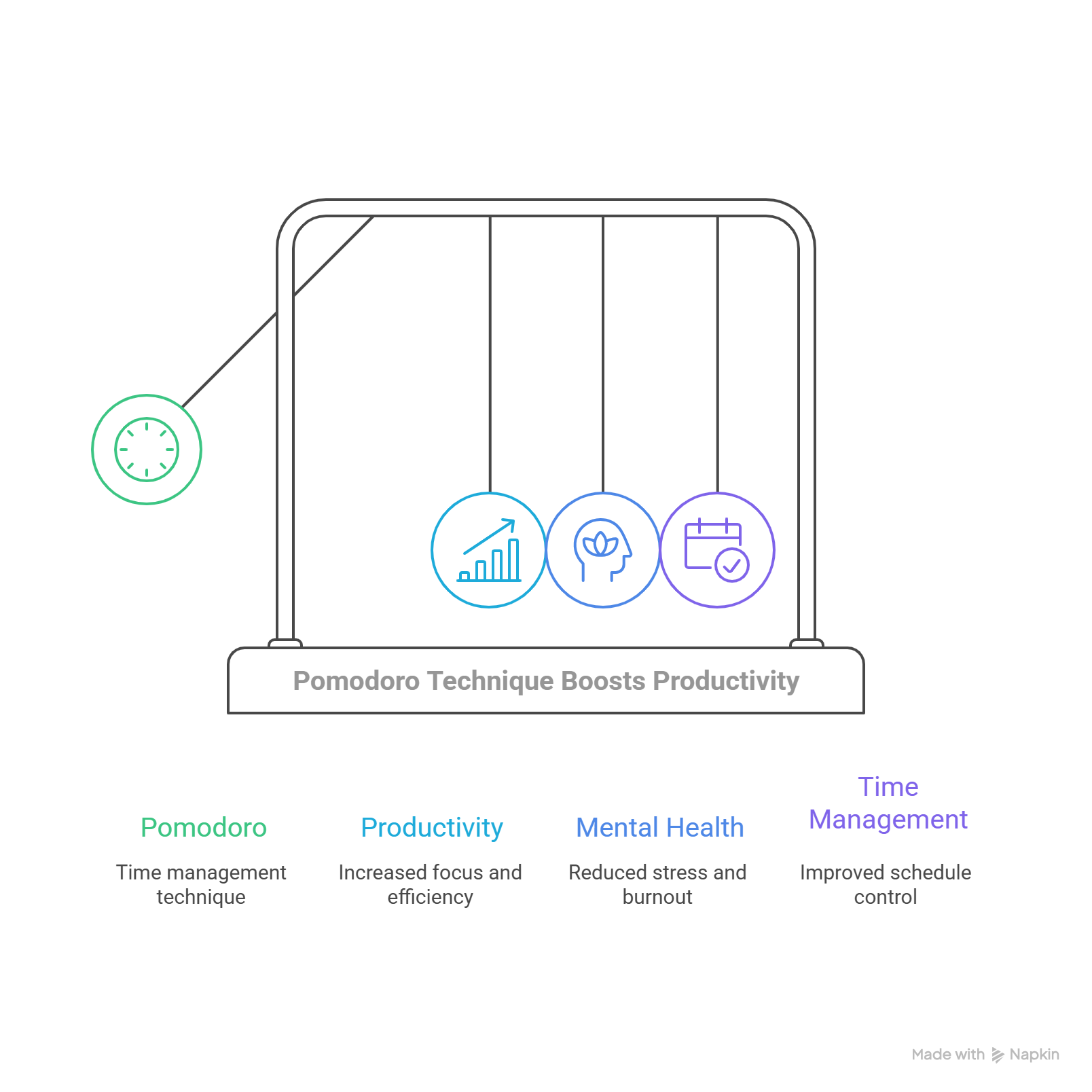
A Healthier Way to Study with Pomodoro
Implementing Pomodoro for Peak Performance
You can achieve maximum productivity by integrating the pomodoro technique into your daily routine. Start by planning your tasks each day. Estimate how many pomodoro sessions each task will need. Break down large projects into smaller, manageable steps. This makes them less daunting. If a task takes less than one pomodoro, combine it with other small tasks. Use a pomodoro timer to enforce your work and break intervals. A digital pomodoro timer app can help you customise session lengths. It can also remind you to take your breaks. Once you set your pomodoro timer, commit to the task without interruption. If you finish a task early, use the remaining time for 'overlearning' or skill improvement. This helps you sharpen your concentration and boost efficiency.
Customising Your Pomodoro for Personal Flow
The standard 25-minute pomodoro is a great starting point. However, you can customise your pomodoro for personal flow. Experiment with different pomodoro and break lengths. Some tasks might benefit from longer sessions, like 52 minutes of focus with a 17-minute break. For tasks you resist, try shorter pomodoro sessions, perhaps 5-15 minutes. During your break, step away from screens. Engage in activities like stretching or going outside. This helps your brain reset. It improves your concentration for the next pomodoro. Regularly review your daily pomodoro plan. Adjust it as needed. This ensures improved time management.
Beyond Productivity: Mental Health Benefits
The pomodoro technique offers more than just productivity gains. It provides significant mental health benefits. Regular breaks are fundamental. They prevent mental fatigue. They ensure your brain does not sustain attention for too long. This reduces cognitive strain. These strategic breaks also alleviate stress and prevent burnout. They encourage physical movement and mental relaxation. This refreshes your mind. It reduces stress and anxiety. The pomodoro method helps you achieve a healthier work-life balance. It creates clear boundaries between work and personal time. This structured approach helps you avoid overwork. It empowers you to control your schedule.
Avoiding Common Pomodoro Pitfalls
You must avoid common mistakes to get the most from the pomodoro technique. Do not rigidly adhere to 25-minute intervals if they do not suit your task or energy levels. Ineffective breaks are another pitfall. Do not use your break for screens or work-related thoughts. This prevents true rejuvenation. Skipping breaks is also a mistake. Breaks are essential for mental reorganisation. They help you return to work with a clear head and laser-sharp focus. Do not continue working after the pomodoro timer rings. Stop at 25 minutes. This helps you manage interruptions. It helps you maintain your laser-sharp focus for each pomodoro.
The Pomodoro Technique is a research-backed approach to productivity, not just a simple timer. It helps you manage attention by working in focused bursts followed by purposeful breaks. Each pomodoro supports sustained concentration, reduces mental fatigue, and improves overall well-being.
When used correctly, this technique can transform how you study and work. With guidance from Suited Tutor, students learn how to apply the Pomodoro Technique effectively alongside personalised study strategies. Our tutors help you build focus, confidence, and long-lasting study habits that lead to real academic success.
See Also
Unlock Your Potential: Master Note-Taking for Superior Information Retention
Maximise Your Learning: Smart Study Strategies for Efficient Sessions
Solving Learning Challenges: The Impact of Effective Note-Taking
Cultivating Young Minds: Inspiring a Lifelong Love for Reading
Navigating Digital Classrooms: Mental Health Impacts of Online Education