Which Learning Style Wins? Online vs. Traditional Classrooms from a Student, Tutor, and Parent Perspective

Welcome to our educational platform, where excellence in education meets the convenience of both online and in-person classes across the UK. We’re not just another tutoring company; we are an industry-leading tuition provider dedicated to delivering exceptional learning experiences nationwide. Whether you’re a parent seeking tailored support, a tutor adapting to modern education, or a student deciding which path to follow, this guide compares online learning vs. traditional classrooms to help you make an informed choice.
At Suited Tutor, quality education is combined with the flexibility of online and in-person classes. Rather than being just another tutoring service, we aim to provide dependable, accessible support tailored to learners and families across the UK.
Understanding Online Learning
Online learning, or digital education, has reshaped how UK students and adult learners access knowledge. The shift accelerated during COVID-19, but even as schools reopened, e-learning remained a permanent part of the landscape. According to Jisc’s UK Digital Experience Insights survey, 70% of higher education students said online tools improved their ability to review and revisit material at their own pace.
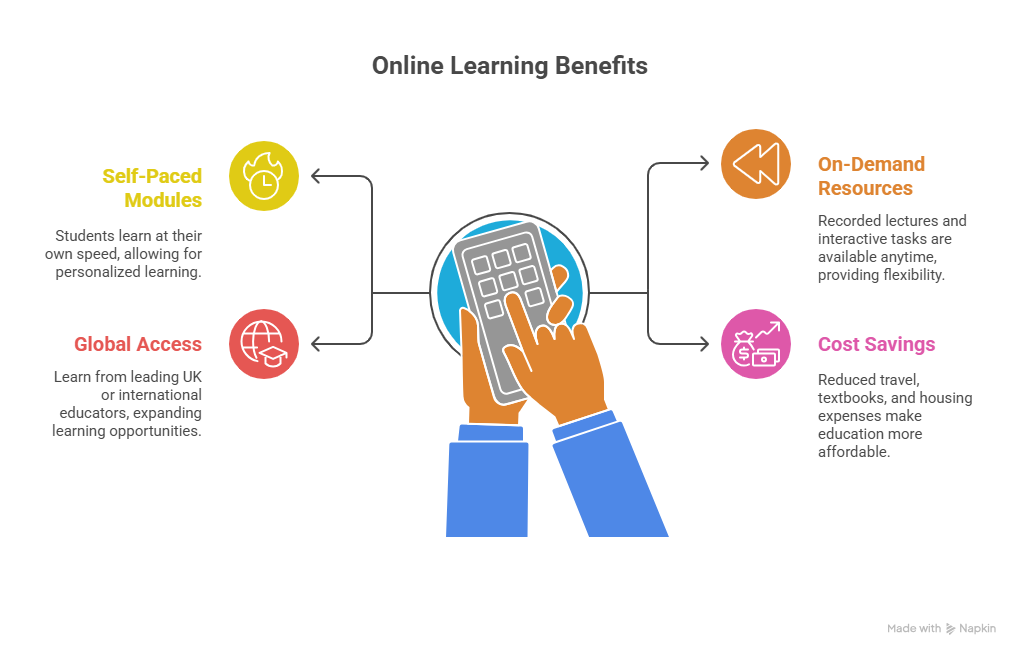
Flexibility and Accessibility
Online courses eliminate commuting, save on accommodation costs, and allow students in remote areas—like parts of the Scottish Highlands or rural Wales—to access top-tier instruction. Learners can pause, rewind, or revisit lessons, giving them control over their own progress.
Technology and Tools That Power E-Learning
Learning Management Systems (LMS) such as Moodle and Canvas help organise coursework and feedback.
Platforms like Zoom and Microsoft Teams enable live, interactive sessions.
Tools like Quizlet gamify revision, improving retention
Understanding Traditional Classrooms
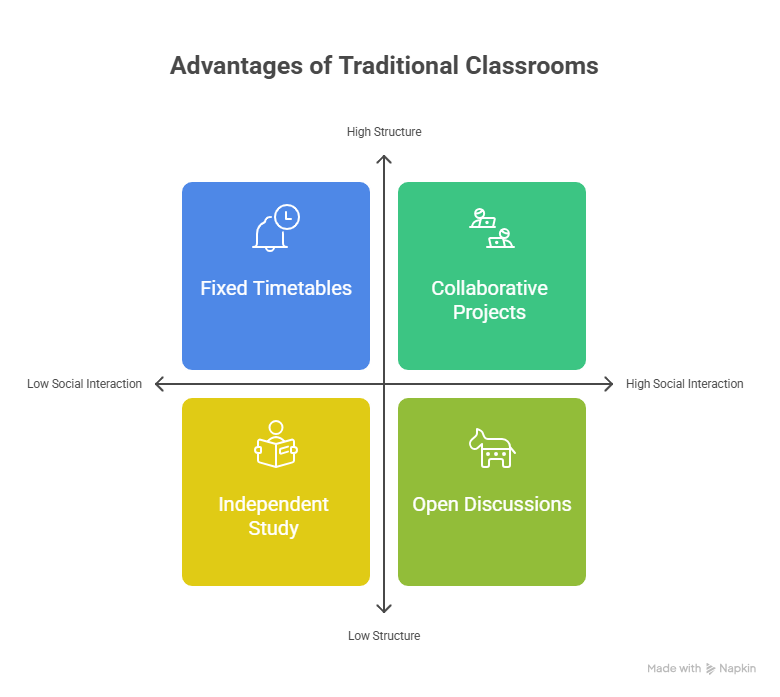
Traditional classrooms remain the heart of British education. From bustling secondary schools to lecture halls at Oxford University, in-person learning offers structure and routine. Students benefit from immediate access to tutors and peers—critical for discussions and collaborative work.
Face-to-Face Interaction
The intangible energy of a classroom—seeing classmates’ expressions or a tutor’s enthusiasm—fosters engagement. Studies by the Education Endowment Foundation note that in-person interactions strongly support social skills and collaborative learning.
Structured Schedules and Routine
Routine benefits many learners, particularly younger students. Fixed timetables and bell schedules create boundaries between school and leisure, which can help reduce procrastination and improve focus.
How Students Experience Online and Traditional Learning
Benefits of Online Learning for Students
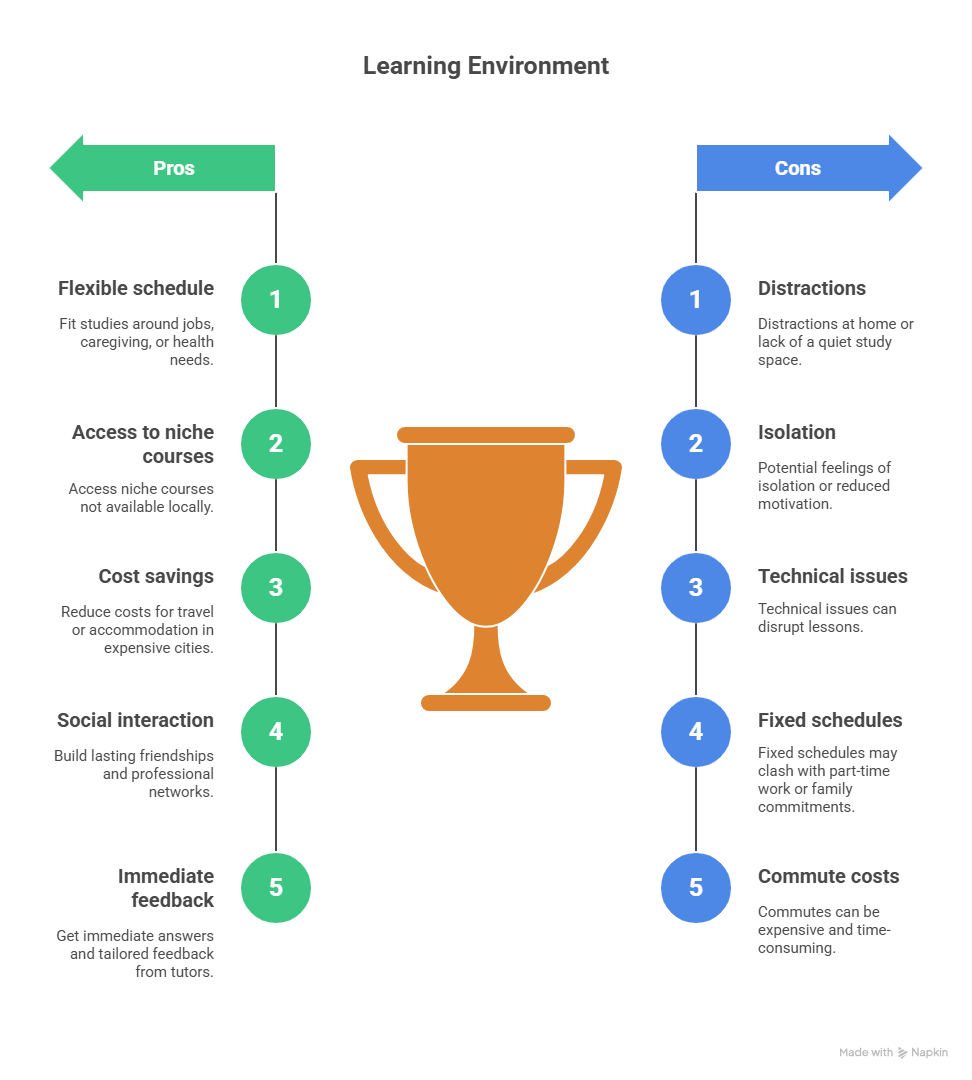
Fit studies around jobs, caregiving, or health needs.
Access niche courses or qualifications not available locally.
Reduce costs for travel or accommodation in expensive cities like London.
Challenges of Online Learning for Students
Distractions at home or a lack of a quiet study space.
Potential feelings of isolation or reduced motivation without in-person accountability.
Technical issues can disrupt lessons.
Benefits of Traditional Classrooms for Students
Build lasting friendships and professional networks.
Get immediate answers and tailored feedback from tutors.
Participate in extracurricular clubs, sports, and cultural events - activities that are valuable for personal growth.
Challenges of Traditional Classrooms for Students
Fixed schedules may clash with part-time work or family commitments.
Commutes can be expensive and time-consuming, particularly in rural areas.
How Tutors Adapt to Online and Traditional Teaching
Advantages of Teaching Online
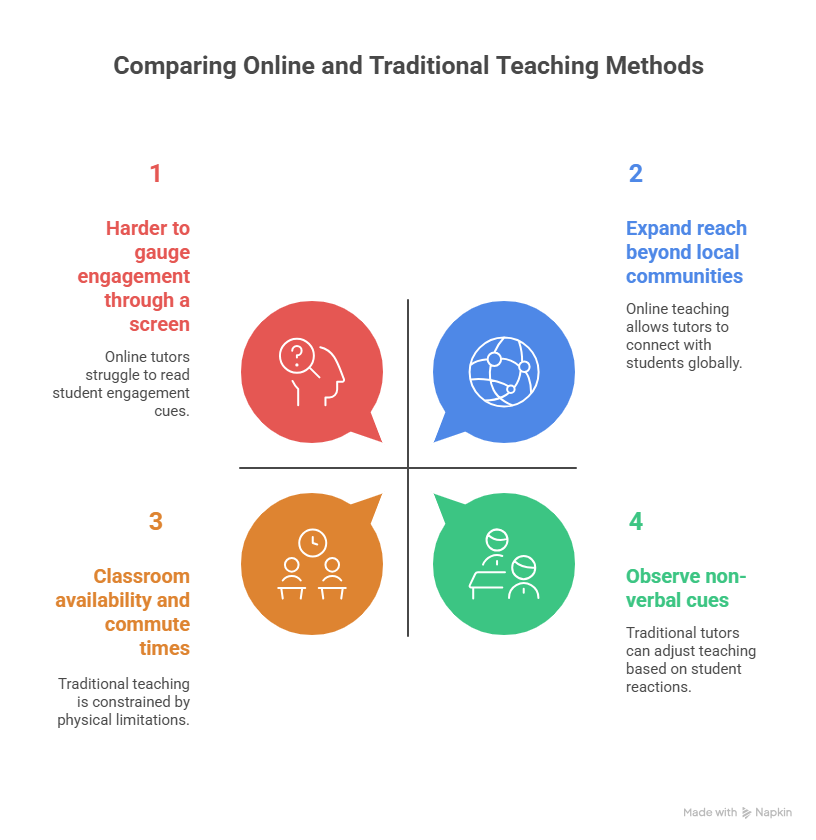
Expand your reach beyond local communities—tutors in Manchester can teach students in Belfast or even abroad.
Flexible scheduling and reduced travel time.
Analytics tools within LMS platforms help track student progress.
Challenges Tutors Face Online
Harder to gauge engagement through a screen.
Technical glitches can disrupt lessons.
Requires creativity to maintain rapport.
Advantages of Traditional Teaching
Observe non-verbal cues to adjust teaching style on the spot.
Spontaneous discussions and group activities can spark deeper understanding.
Challenges in Traditional Settings
Classroom availability and commute times can limit flexibility.
In-person teaching may involve higher resource costs.
How Parents View Online and Traditional Learning
Online Learning from a Parent’s View
Parents appreciate transparency—being able to observe lessons or check progress online. Yet, concerns about screen time, physical activity, and social skill development are common.
Traditional Classrooms from a Parent’s View
Many parents prefer the system they experienced themselves. Schools provide childcare during work hours and essential socialisation for children. But rigid schedules and school runs can be stressful.
Key Differences Between Online and Traditional Learning
Flexibility and Time Management
Online learning wins for flexibility, especially for older students balancing work or caring responsibilities. Traditional settings are better for those who need external structure.
Social Skills Development
Traditional classrooms cultivate teamwork, empathy, and confidence. Hybrid models can help retain this benefit while offering some flexibility.
Academic Performance and Outcomes
Research by UCL Institute of Education suggests that blended learning—mixing online modules with in-person classes—can improve outcomes compared to fully online or fully traditional formats.
Cost and Resources
Online courses save on travel and materials but may require investments in broadband or laptops. Traditional schooling has its own costs: uniforms, transport, and activity fees.
How to Decide the Best Learning Style
Considering Learning Preferences and Goals
Evaluate your circumstances:
Are you self-motivated and organised? Online may suit you.
Do you thrive in community and need live accountability? Traditional learning may be best.
For practical subjects requiring labs or studios, in-person time is essential.
Blended Learning as a Middle Ground
Many UK schools and universities now offer hybrid learning. According to Jisc, blended approaches deliver higher satisfaction, better engagement, and greater accessibility—making them the emerging standard.