7 Ways Students Can Stop Procrastinating & Start Achieving


You're not alone. Many students procrastinate, a common issue that impacts academic performance and well-being. In fact, 81% of students delay tasks, often leading to increased stress and poorer grades. This isn't a personal failing. You can stop putting things off. This guide offers helpful, research-backed strategies to help you achieve this. These tips will transform your habits, providing clear steps for sustained success. Designed for students, these aren't quick fixes but rather tools to build new habits and overcome procrastination. This guide provides valuable insights to show you how.
1.Break Down Tasks to Overcome Procrastination
Big assignments can feel too much. This often makes you procrastinate. Breaking tasks down helps you overcome procrastination. These strategies are key for doing well in school.
Divide Large Assignments
A very big assignment can seem hard to start. This feeling makes you wait to begin. Instead, split it into smaller parts. This simple strategy helps you just start. The task will seem easier.
Set Manageable Mini-Goals
After you split your assignments, set small goals for each part. These goals should be SMART. They need to be Specific, Measurable, Achievable, Relevant, and Time-bound. For example, you want a First-Class Honours degree. Break it down. You can check module handbooks in week one. Then, set study times each week. Make notes every day. Check your progress often. Celebrate small wins. This builds motivation. It helps you stop procrastinating. For instance, after checking syllabi, watch your favourite show. After reading, have a snack. These small treats keep you going.
Plan Your Day Ahead
Good planning is very important for students. Each evening, list your tasks for the next day. Decide what you will do. Decide when you will do it. This gets your mind ready. It stops you from wondering what to do in the morning. Knowing your plan helps you start studying right away. You will find it easier to start studying. You will have a clear map. This simple habit helps many students avoid procrastination.
2.Boost Focus with the Pomodoro Technique
You can work better. You can stop procrastinating. Use smart time management techniques. The Pomodoro Technique is great. It helps students stay focused. This method helps you get more done. It plans your work and breaks.
Master the 25-Minute Focus Cycle
Set a timer for 25 minutes. Focus only on one task. The timer rings. Take a short break. This helps you start studying. You will not feel too stressed. 25 minutes is normal. You can change it. Many people focus for 15 to 40 minutes. Find what suits you. You might need more time. This is okay.
Integrate Short, Productive Breaks
Short breaks are very important. They are not just for rest. They make your brain work better. Your brain learns and remembers more. This helps you recall facts. Breaks also recharge your brain. You return to work with new energy. You will focus better. This lowers stress. It stops you from getting tired. You will feel more keen. These techniques help you learn well.
Work During Peak Productive Hours
You have times when you are most awake. These are your best productivity hours. Some students work best in the morning. Others work best at night. Many are most productive in the afternoon. Find your best times. Do your hardest tasks then. This stops you from getting annoyed. You will find it easier to focus. Your mind is naturally sharp then. This smart time management helps you beat procrastination.
3.Optimise Your Study Environment
Your study space matters a lot. It helps you focus. A tidy area helps you beat procrastination. It makes you more productive. You can make a space. It will help you learn.
Enhance Your Study Space
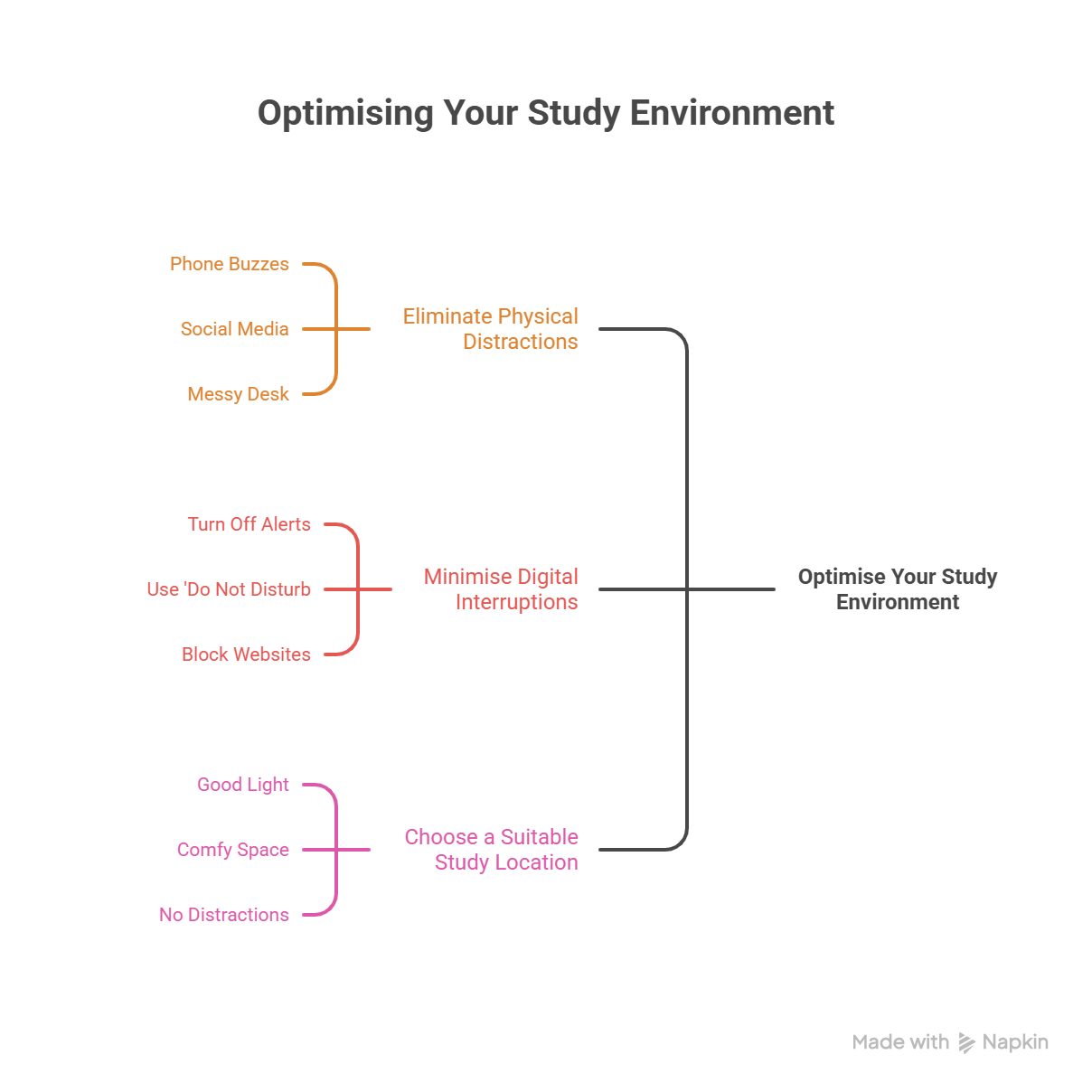
Eliminate Physical Distractions
Many things can distract you. Your phone buzzes a lot. It can stop your study. Social media is very tempting. A TV in the background can distract you. A messy desk is also bad. Notes and books everywhere make it hard to focus. Too much noise can distract you. A room that is too quiet can also distract you. Bad chairs make you move around. Bad light hurts your eyes. Find these distractions. Get them out of your study area. This helps you start studying. Your mind will be clear.
Minimise Digital Interruptions
Computers and phones are strong tools. But they can also interrupt you. You can take charge. Set aside time for deep work. Turn off alerts then. Use 'Do Not Disturb' on your devices. Windows users can use 'Focus Assist'. This stops alerts. Think about using apps like Forest. Or use Cold Turkey. These apps block websites. They stop you from getting distracted. You can also put your phone away. Put it in another room. This helps you focus only on your task. It makes you much more productive.
Choose a Suitable Study Location
Picking the right study spot is key. You need a special study space. Do not study in your bed. A special area tells your brain to focus. Make sure your space has good light. This stops eye strain. Make it comfy. You can study longer then. Your spot should have no distractions. A neat and tidy area helps your mind. It makes it clear. You can even add things you like. This helps many students stay keen.
4.Prioritise Tasks for Academic Success
Good planning is a strong tool. It helps you stop putting things off. It helps you do well in school. You can put your energy where it counts. This part gives you key ways to manage your time.
Differentiate Urgent from Important
Not all tasks are equal. Urgent tasks need attention right away, while important tasks support long-term goals. The Eisenhower Matrix helps you sort them:
Important + urgent: top priority, like close deadlines.
Important but not urgent: plan these for later, such as long-term projects.
Urgent but not important: quick tasks or emails you can delegate.
Not urgent + not important: distractions to remove.
This helps you focus on what truly matters.
Set Clear Goals and Deadlines
Create SMART goals—Specific, Measurable, Achievable, Relevant, and Time-bound. Clear goals guide your work, like “finish 50 practice questions by Wednesday.” Break big goals into smaller steps and celebrate progress to stay motivated.
Avoid Multitasking Pitfalls
Multitasking doesn’t save time. Switching tasks slows you down, causes mistakes, and hurts memory. Focus on one task at a time for better and faster results.
5.Uncover Procrastination Triggers

Identify Underlying Reasons for Delay
Procrastination is often more than poor time use. You may delay because you doubt your abilities, fear the task won’t go well, or feel your skills are pointless. Social media, fear of failure, perfectionism, and low interest can also pull you away. Understanding your feelings with kindness helps you change these patterns.
Understand Procrastination as Self-Protection
Procrastination can act as a coping strategy, not laziness. Delaying a task can briefly reduce worry or fear of failing, even though it harms you in the long run. Seeing it as self-protection helps you address the root cause.
Practise Self-Compassion
Be gentle with yourself when you procrastinate. Harsh judgement only blocks progress. Notice signs of stress, allow short pauses, and return to work calmly. Everyone delays at times—focus on improving next time to build resilience and motivation.
6.Use Others to Help You
You can do great things. You need help. Others can keep you on track. This is strong. It makes you work better. It helps you beat procrastination. You will reach your goals easily.
Get a Study Friend
Support from others strengthens your motivation and reduces procrastination. A study friend helps you stay accountable, checks on your progress, and encourages you when you’re tired. With someone watching your goals and study plans, it becomes harder to make excuses or give up.
Join a Good Study Group
A well-chosen study group improves learning. Pick members with similar goals and strong work habits. Set clear rules, meeting times, and responsibilities to stay focused. A good leader keeps discussions organised and ensures everyone contributes, creating a respectful, productive environment.
Have Regular Catch-Ups
Consistent check-ins build accountability. Meeting weekly, fortnightly, or monthly helps you stay on track with different types of goals. Choosing the right rhythm keeps you progressing, focused, and committed.
7.Reward Progress to Achieve Goals
You can truly transform your study habits. You can achieve your academic dreams. Rewarding your progress is a powerful way to do this. It keeps you moving forward. It helps you stay committed to your goals.

Celebrate Learning Achievements
Establish Positive Reinforcement
"Behaviour that gets rewarded gets repeated." This simple truth guides you. When you reward a good action, you make it more likely to happen again. You can use many types of rewards. Give yourself verbal praise. Say "Well done!" for finishing a tough task. Use a reward chart to track your progress. You could earn a sticker for each study session. You might get a certificate for completing a big project. Public recognition also works well. Your friends or family can celebrate your small wins. These actions build strong study habits. They help you overcome procrastination.
Choose Meaningful Rewards
Pick rewards that genuinely feel good and use them after productive work. A cup of tea or reading a favourite article can give quick pleasure, while also building confidence and a sense of mastery. These positive feelings help break the procrastination cycle and strengthen motivation through a simple reward system.
Focus on Consistent Effort
Value the effort you put in, not just the final result. This encourages a growth mindset, resilience, and the belief that success comes from your actions. Seeing mistakes as learning opportunities boosts motivation and self-efficacy, helping you stay persistent and achieve long-term goals.
These seven tips can change everything. Stopping putting things off takes time. It is not a quick fix. Small steps help you make big progress. Pick one or two tips to begin. Slowly add more tips to your daily life. Take charge of your school future. You can do your very best. These tips give you hope. They show you what you can do. You will do great things with these tips.
And if you or your child need extra guidance, our Suited Tutor team in Oxford is here to help. With patient, supportive tutoring, we build confidence, strong habits, and a real love for learning. With the right support, you can go further than you ever thought.
See Also
Mastering Revision: Seven Key Strategies for Astute Academic Achievement
Overcoming Academic Hurdles: Comprehensive Advice for Learners, Guardians, Educators
Achieving Academic Excellence: Four Crucial Stages on Your Journey
Intelligent Study Methods: Boost Your Learning with Effective Session Strategies
Managing Childhood Stress: Practical Ways to Handle Schoolwork Demands