7 Essential Revision Techniques for Smart Students


You might often feel overwhelmed by revision; a recent survey found half of 15-18 year olds confessed to this during their studies. Smart students do not just cram. They employ specific, proven-effective strategies. This study guide shares 7 essential revision techniques. These expert study tips will help you study smarter, not harder. You will gain deeper understanding, better retention, and reduce stress. These effective study and revision techniques transform your study habits, helping you avoid common pitfalls in your learning. You will find effective study skills here, offering top tips for effective revision.
1. Master Your Revision Schedule

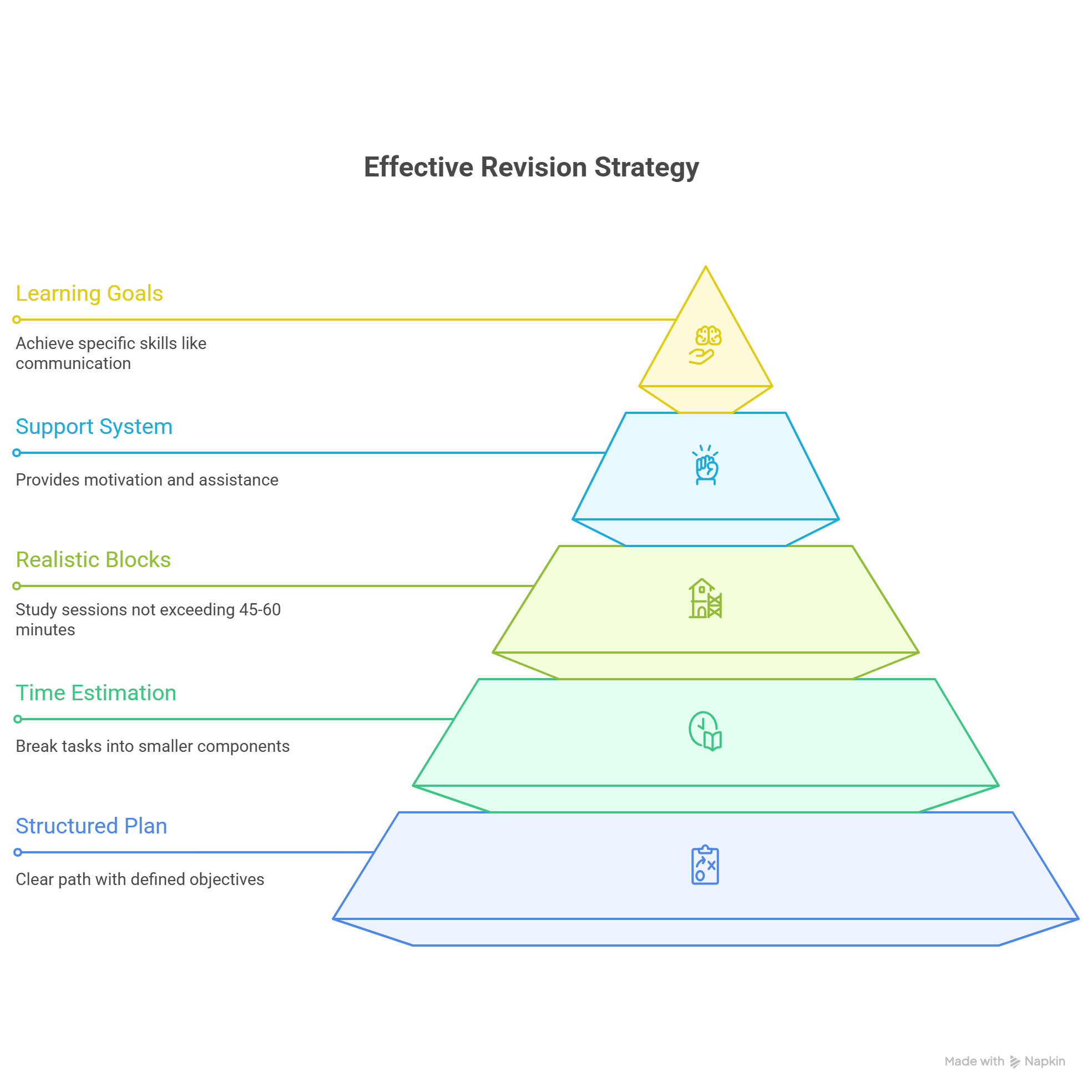
Successful revision starts with a well-organised plan. A structured study programme gives you a clear direction, defined goals, and a visual overview of your learning journey. This structure helps you stay on track, understand your priorities, and manage your time efficiently. One of the key benefits of a planned approach is achieving specific learning outcomes — whether that’s improving problem-solving or communication skills. A clear study plan also maximises productivity, ensuring every session has purpose. Many structured revision strategies include a built-in support system, which boosts motivation and keeps you accountable.
When designing your revision timetable, divide your study sessions into manageable chunks — ideally lasting between 45 minutes and an hour. Short, focused sessions help prevent burnout and improve concentration.
To plan your study time effectively, break each subject or task into smaller, achievable parts. Estimate how long each section will take based on its difficulty and your familiarity with the topic. Then, total these times to create an accurate schedule. Always allow extra time for unexpected challenges; doubling your initial estimate is a sensible rule of thumb. This detailed, bottom-up approach to time management ensures your revision stays realistic and flexible. Don’t forget to include personal commitments — such as family time, meals, or hobbies — to maintain a healthy balance while preparing for exams.
2. Creating a Study Schedule
Effective revision begins with a well-structured plan. A structured learning programme offers a clear path, defined objectives, and a visual environment. This helps you understand your expectations and timelines. Benefits include achieving specific learning goals, such as improving communication skills. You gain efficiency in learning, as a clear path maximises your study time. Many structured programmes also provide a support system, which helps with motivation. When creating a study schedule, break your study sessions into realistic blocks, ideally not exceeding 45 minutes to an hour. This prevents burnout and ensures you take breaks.
To estimate your study time accurately, identify all stages of a task and break them into smaller components. Estimate the time for each component, considering its complexity and your experience. Sum these times for an overall estimate. Always add extra time for unexpected delays; doubling your initial estimate is a good rule of thumb. This bottom-up estimation method works well for clear tasks. Remember to factor in other commitments like family time or hobbies.
Smart Study Approach
3. Optimise Your Study Environment
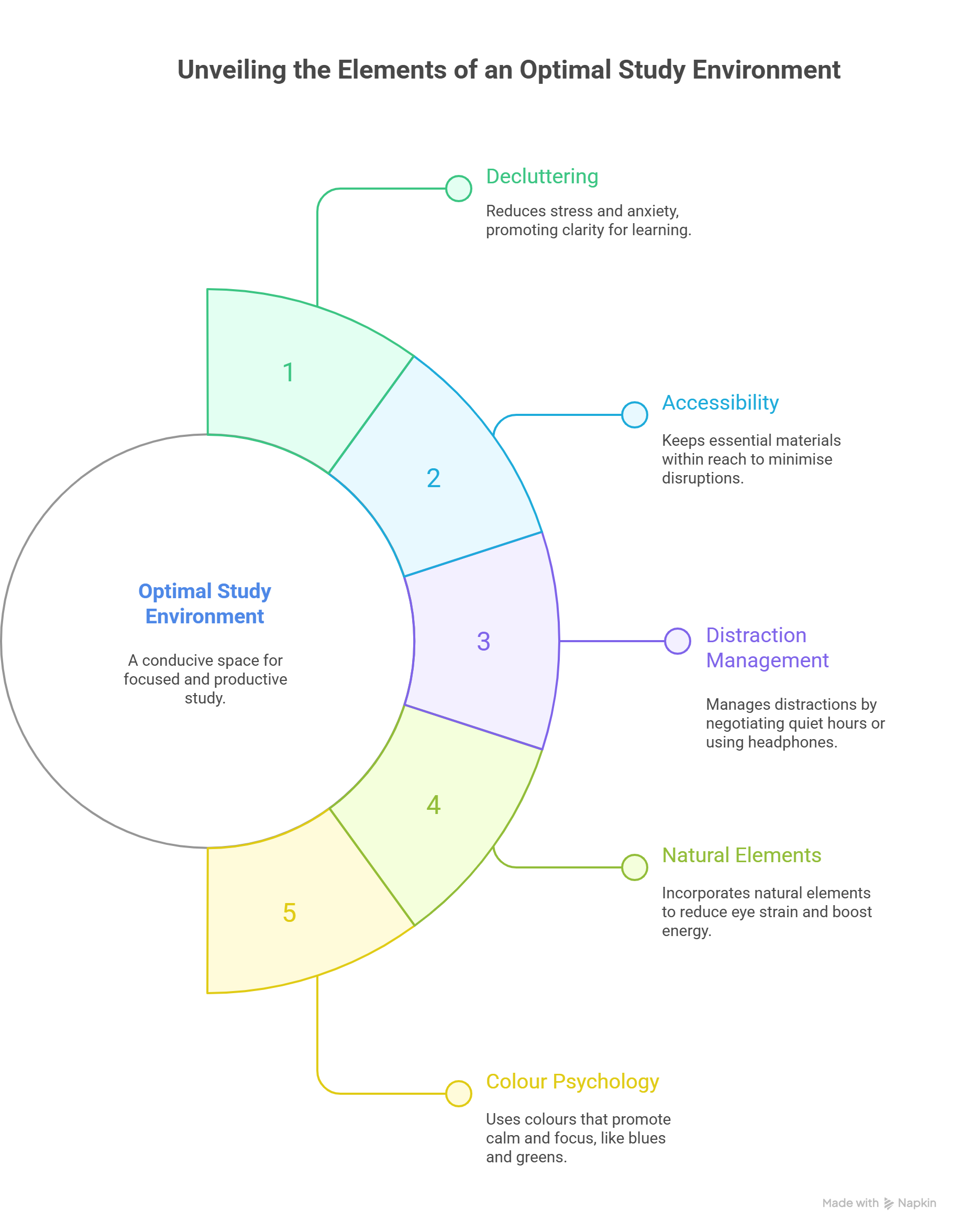
Your surroundings significantly impact your focus. An optimal study environment is crucial for productivity. Decluttering your space reduces stress and anxiety, promoting clarity for learning. Keep essential materials within reach to minimise disruptions. Manage distractions by negotiating quiet hours or using noise-cancelling headphones. Blocking digital distractions with apps or keeping your phone in another room also helps. Incorporate natural elements where possible; natural light reduces eye strain and boosts energy. Adding plants or a view of nature can also enhance your mental energy. Consider using colours that promote calm and focus, like blues and greens.
Optimised Study Routine
4. The Power of Planned Breaks
Your brain is not designed for sustained, full-capacity function without rest. Prolonged study without breaks leads to cognitive overload, fatiguing the neurons responsible for processing information. This decreases your concentration and retention. Regular breaks prevent this fatigue, allowing your brain to consolidate new information through the 'spacing effect', which improves long-term memory. Breaks refresh your focus. The Pomodoro Technique, for example, involves 25 minutes of focused study followed by a 5-minute break. This Pomodoro method effectively leverages your brain's natural attention span. After four cycles, take a longer break of 15-30 minutes. This strategy rejuvenates your mind, making it easier to tackle complex topics with renewed vigour.
Study Smarter, Not Harder with Active Recall
5. Embrace Active Recall
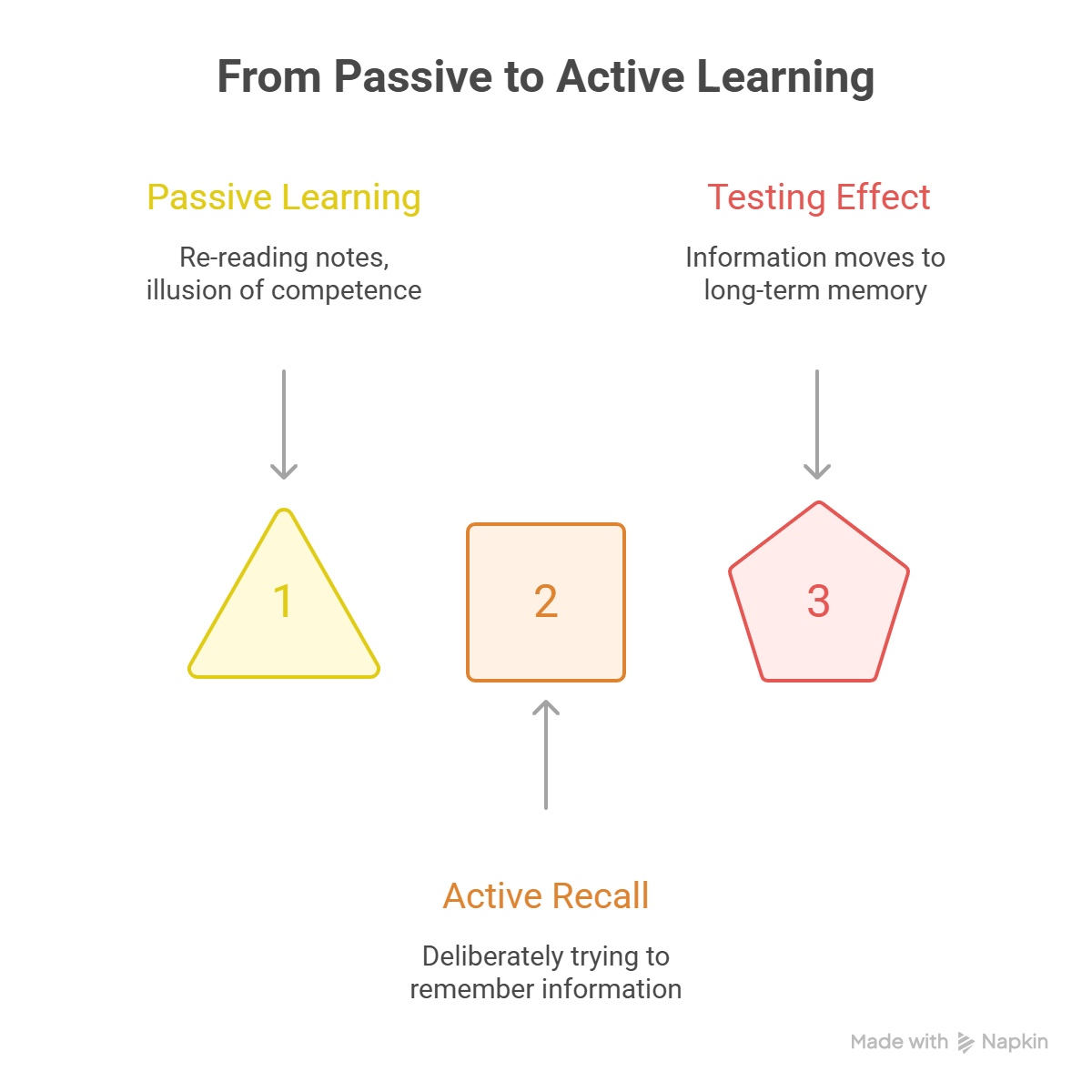
Passive learning, like simply re-reading notes, often creates an illusion of competence. You might feel you understand the material, but true understanding comes from active engagement. Active recall, also known as retrieval practice, means you deliberately try to remember information. This strengthens neural connections. Studies show retrieval practice significantly enhances learning more effectively than just reviewing material. It activates the 'testing effect', which helps information move from short-term to long-term memory. Even attempting to retrieve information, even if incorrect, improves your learning and long-term retention. This is a powerful revision method.
Test Yourself to Learn Better
6. Self-Test for Deeper Learning
Self-testing is crucial for deeper learning. It is far more effective than passive review. When you test yourself, you force your brain to retrieve information. This makes the information more accessible later. Passive reading does not challenge your brain to recall or apply information. It often leads to remembering only the main idea, not the specific details you need for exams. Incorporating self-testing into your revision routines significantly improves retention. For example, close your book after reading a section. Then, try to recall the main points from memory. This active studying technique creates stronger, more durable learning. It helps you identify knowledge gaps and prevents the 'illusion of knowledge'.
7. Become the Teacher
One of the best ways to solidify your understanding is to teach the material to someone else. This is the core of the Feynman Technique. First, choose a topic you want to understand. Second, pretend to teach it to someone who knows nothing about it. Explain the concept in simple terms. As you explain, you will identify gaps in your own understanding. Third, review your sources to fill these gaps. Finally, simplify your explanation. Try teaching it again. This active studying approach forces you to clarify your thoughts and simplify complex ideas. It is an excellent revision technique for deep learning. You can also use 'blurting' as a revision method. After studying a topic, write down everything you remember without looking at your notes. This helps you test yourself and see what you truly know.
Feeling overwhelmed by revision is common — nearly half of students aged 15–18 admit to it. But successful learners don’t just cram; they use structured, evidence-based strategies to make studying more effective. This guide introduced seven essential techniques to help you study smarter, not harder. You learned how to plan your revision schedule, optimise your environment, and take purposeful breaks to boost focus and retention. You also explored active recall, self-testing, and the power of teaching others to reinforce understanding. These proven study methods transform revision into a confident, productive process that reduces stress and improves memory. By implementing these approaches consistently, you’ll move from passive reading to truly active learning. For personalised support and expert tutoring tailored to your learning style, Suited Tutor, a trusted Oxford-based provider, helps hundreds of students strengthen their skills, achieve academic success, and study with confidence.
See Also
Crafting an Effective Revision Timetable: Your Comprehensive Guide to Success
Top Student's Secrets: Acing Triple Science GCSE Revision Strategies
Maximise Your Study Sessions: Smart Efficiency Tips for Academic Success
Grammar School Exams: Three Essential Preparation Steps for UK Students
Five Crucial Soft Skills for Students: Paving Your Path to Success